
THE ART FORMS
A visit to the magnificent National Portrait Gallery, we explore how the prevailing mood and societal values of each era have been vividly captured in portraiture. There are multiple art forms on display at the NPG but the ones below are the themes that the Artful Georgian covers on the tour.
From the tradtions of the Tudor's, the dramatic dynamism of Baroque art, through to the playful elegance of Rococo, the noble ideals of Neo-Classicism, the intense emotions of Romanticism, and the unvarnished truth of Victorian Realism, you'll see how artists mirrored and influenced their times. By having a slight understanding of these art forms, the Artful Georgian hopes to give you a deeper appreciation for the techniques, symbolism, and historical significance of the portraits we explore.
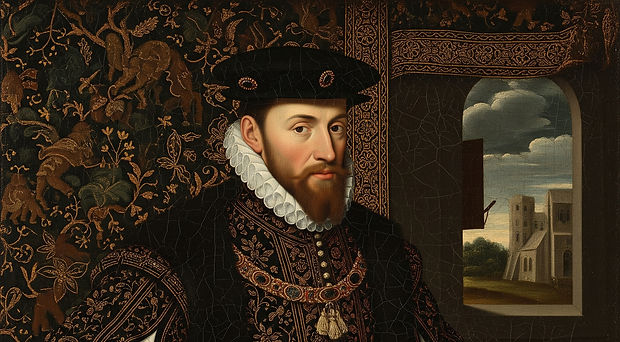
FORMALITY OF TUDOR
Tudor art is defined by its focus on portraiture, which served as a powerful tool for conveying status and political power. It was a transitional style, blending late Gothic traditions with early Northern Renaissance. A key feature is the use of symbolism, where every detail—from clothing and jewels to symbolic objects—was carefully chosen to communicate a message about the sitter's identity and authority.
The art of the period was dominated by Hans Holbein the Younger, whose revolutionary work as court painter to Henry VIII set a new standard for realism and psychological depth. His portraits not only captured a likeness but also created an enduring visual legacy of the Tudor dynasty

DRAMA OF BAROQUE
The Baroque art form, which flourished in Europe from the early 17th century to the mid-18th century, is characterized by its dramatic, dynamic, and emotional qualities. Emerging from the late Renaissance, it was a style that sought to evoke powerful feelings and intellectual engagement.
The compositions typically give a feeling of movement and energy, a stark contrast to the balanced, rational compositions of the High Renaissance period during the Tudors. Symbolism is often layered, with religious narratives, high status figures, and mythological scenes used to convey grand themes of power, glory, and martyrdom. It dominated painting, sculpture, and architecture, leaving a legacy of works that continue to inspire.

ELEGANCE OF ROCOCO
Rococo emerged in France in the 18th century as a reaction against the grandeur and strictness of its predecessor. It is a lighter, more whimsical, and ornamental style. While Baroque was serious and dramatic, Rococo was playful, elegant, and often sensual. The colour palette shifted to soft pastels, golds, and ivory.
The subjects were typically lighthearted, focusing on aristocratic leisurely activities, pastoral scenes, romantic encounters, and mythological tales with a playful undertone. Rococo's impact on art history is significant as it represented a movement away from public, monumental art towards a more intimate, decorative style suited for private residences and salons. It marked a period where art was not just for grand display but for personal enjoyment and interior decoration.
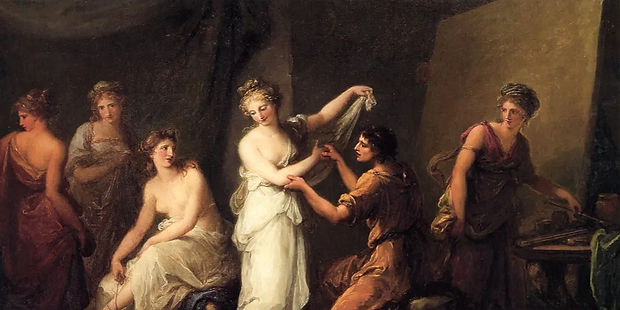
IDEALS OF NEO-CLASSICISM
Neoclassicism was an art movement that dominated the late 18th and early 19th centuries, drawing inspiration from the art and culture of classical antiquity, specifically ancient Greece and Rome. Georgian gentlemen on their Grand European Tours directly encountered the classical ruins of Rome and these firsthand experiences with Greek and Roman art and architecture provided a powerful catalyst for a new art movement.
Features include clean lines and a rejection of the expressive brushwork of previous periods. The colour palette is muted and controlled, with strong contrasts to define form rather than create drama. Symbolism is intentional, using and historical events to promote ideals of patriotism and duty.

EMOTIONS OF ROMANTICISM
Emerging in the late 18th century and flourishing throughout the 19th, Romanticism was an art movement that prioritized emotion, and individualism. It was a direct response to the rationalism of the Enlightenment and the rigid rules of Neoclassicism. Romanticism valued feeling over reason, intuition over intellect, and the individual over society. The art is characterized by dramatic, expressive brushwork and a vibrant colour palette.
Subject matter is diverse, ranging from landscapes and exotic historical events to scenes of intense personal struggle and passion (just like Beethoven's portrait by Stieler from 1820). Symbolism revolved around the power of nature, the heroism of the common person, and the exploration of inner psychological states. It laid the groundwork for modern art by freeing artists from the constraints of academic rules, allowing for increased self-expression.
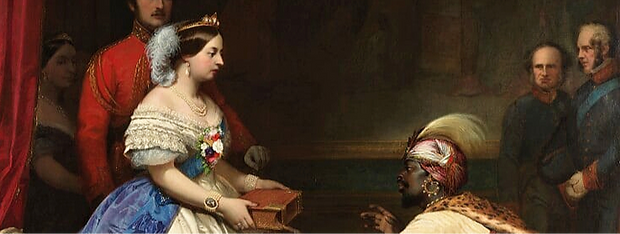
'HONESTY' OF VICTORIAN REALISM & HIGH ART
Victorian High Art was the official, academic style, gaining popularity form the 1850's onwards. It drew inspiration from classical antiquity, literature, history, and mythology. Artists aimed to create idealized, noble, and emotionally uplifting works, often on a large scale for public display. It was the art of the establishment, focusing on beauty, moral themes, and a sense of grandeur.
In contrast, Victorian Realism was a counter-movement that sought to depict life truthfully and without idealization. It was heavily influenced by social issues of the time, such as poverty and the effects of industrialization. Realist artists focused on the mundane, everyday lives of ordinary people, often with a raw, documentary-like quality, to evoke empathy and inspire social reform